
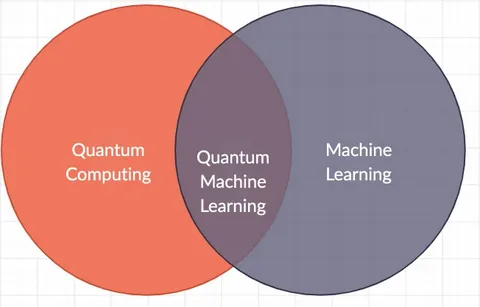
Languages are more than just systems of communication; they are vessels of culture, memory, and history. Yet countless tongues have been lost, preserved only in fragments of inscriptions, half-deciphered scripts, or scattered oral traditions. For centuries, linguists and historians have tried to piece together these linguistic puzzles with painstaking manual work. Now, a new player is entering the field: quantum machine learning. By marrying the probabilistic reasoning of quantum mechanics with the pattern-finding strength of artificial intelligence, researchers are beginning to imagine how once-lost languages might be reconstructed.
Why Ancient Languages Matter
The reconstruction of ancient languages is not a purely academic exercise. Recovering forgotten scripts can unlock knowledge about trade, migration, governance, and even forgotten sciences. The decipherment of Egyptian hieroglyphs through the Rosetta Stone revealed centuries of civilisation. Similarly, if we could decode the still-mysterious Indus Valley script or Mayan glyphs, it could reshape our understanding of human development. But traditional linguistic analysis alone often struggles because many of these languages lack sufficient parallel texts or living speakers.
Where Classical AI Meets Its Limits
In recent years, machine learning has been applied to the decipherment of languages. Neural networks excel at pattern recognition, making them well-suited for tasks like translating between modern languages. However, ancient languages pose unique challenges: data is sparse, texts are often fragmented, and context is frequently ambiguous. For instance, a single glyph may carry multiple meanings depending on position or cultural context. Classical AI, reliant on large volumes of clean data, often fails when confronted with such uncertainty.
This is where quantum computing offers an intriguing alternative. Quantum systems process information in superpositions, handling probabilities in ways that classical algorithms cannot. That makes them ideal for working in domains where ambiguity is not a bug but the fundamental condition.
Quantum Machine Learning as a New Lens
Quantum machine learning (QML) blends quantum computation with AI techniques. Instead of processing one possibility at a time, QML models explore multiple potential interpretations simultaneously. For ancient language reconstruction, this is a game-changer. A quantum-enhanced model could consider a vast number of possible translations or symbol correspondences in parallel, pruning them down as new evidence emerges.
Imagine a dataset of partially deciphered inscriptions. A QML algorithm could map possible symbol meanings across multiple contexts at once, weighing probabilities rather than forcing binary choices. The result would not be a single rigid translation but a spectrum of plausible interpretations, narrowing as more inscriptions are analysed. This mirrors the way human experts work — hypothesising, revising, and refining — but at a scale and speed that humans cannot match.
Case Studies on the Horizon
Although still in its early stages, experiments have hinted at the possibilities. A 2022 paper suggested that quantum-inspired tensor networks could model relationships in sparse linguistic datasets with greater efficiency than classical neural networks. Another project at MIT explored quantum-inspired algorithms for reconstructing phoneme structures in extinct dialects. While these are preliminary, they point towards a future where quantum tools complement traditional linguistic methods rather than replace them.
The implications go beyond archaeology. Reviving ancient languages could also aid in cultural preservation. Communities seeking to reconnect with their linguistic roots might use quantum-assisted reconstructions to restore parts of their heritage. Scholars, meanwhile, could test historical hypotheses more rigorously, comparing reconstructed language patterns with archaeological findings.
Ethical and Philosophical Dimensions
Of course, questions remain. If an algorithm reconstructs a “probable” version of an ancient tongue, how authentic is it? Should scholars treat machine-generated interpretations as equal to human linguistic reasoning? There is also the question of access: quantum computing resources are rare and expensive, concentrated in elite research centres. Ensuring that discoveries benefit global communities, rather than remaining locked in private labs, will be essential.
This ethical debate mirrors wider questions in AI: who owns the knowledge generated by machines, and how do we safeguard against cultural misappropriation? When the subject is as sensitive as ancestral language, these concerns take on added weight.
The Learning Curve for Practitioners
For professionals entering the field of AI, such interdisciplinary applications highlight the need for versatility. A background in linguistics, history, and cultural studies is essential. Those preparing through data science classes in Bangalore, for example, are increasingly being introduced to quantum computing principles alongside classical machine learning. This exposure ensures they are not just skilled in today’s methods but ready for the hybrid paradigms of tomorrow.
As the field matures, universities and training institutes are also beginning to explore how quantum methods can be taught at an applied level. For learners, it’s not about becoming quantum physicists, but about understanding how these tools can be harnessed to address real-world problems — from finance to healthcare to, yes, ancient language reconstruction.
Looking Ahead: Possibility Over Certainty
Quantum machine learning will not hand us perfect translations overnight. Instead, it will offer probabilities, pathways, and hypotheses. It will be up to human scholars to interpret and validate these outputs, combining machine efficiency with cultural sensitivity. In this sense, quantum methods are not a replacement for human creativity but an amplifier of it.
For students, researchers, and innovators, especially those training in data science classes in Bangalore, the message is clear: the frontiers of AI are no longer confined to predicting customer behaviour or optimising logistics. They stretch into the very fabric of human history, offering tools to recover voices that were once thought lost.
Conclusion
Reconstructing ancient languages has always been an act of imagination as much as it is a scholarly endeavour. With quantum machine learning, that imagination gains a new engine. By embracing the probabilistic nature of both language and quantum mechanics, we may one day breathe life into scripts and sounds that have been silent for millennia. Whether or not we ever achieve perfect accuracy, the journey itself promises to deepen our understanding of culture, computation, and the enduring human desire to connect with our past.
